Dental clinical notes templates, often in PDF format, are crucial for organized patient care and legal documentation within a dental practice.
These standardized forms ensure comprehensive record-keeping, streamlining workflows and improving communication among dental professionals, ultimately enhancing patient outcomes.
What are Dental Clinical Notes?
Dental clinical notes are detailed, chronological records of a patient’s dental health journey, encompassing every interaction and treatment received. These notes, frequently maintained as a dental clinical notes template PDF, aren’t simply summaries; they are legal documents reflecting the care provided. They meticulously document observations, diagnoses, treatment plans, procedures performed, medications administered, and the patient’s response to treatment.
A well-maintained note provides a clear picture of the patient’s oral health status over time, facilitating informed decision-making and continuity of care. Utilizing a standardized PDF template ensures consistency and completeness, covering essential elements like medical history, dental history, clinical findings, and treatment details. Accurate and objective documentation is paramount, serving as a vital resource for both patient care and potential medicolegal situations.
Why Use a Template?
Employing a dental clinical notes template PDF offers significant advantages over free-form note-taking. Templates ensure consistency in documentation, covering all necessary components and reducing the risk of omitting crucial information. This standardization streamlines workflows, saving valuable time for dental professionals and improving overall practice efficiency. A pre-designed PDF template promotes thoroughness, guiding clinicians through a systematic evaluation and recording process.
Furthermore, templates enhance legibility and organization, making patient records easier to review and understand. Utilizing a PDF format allows for secure digital storage and easy sharing with colleagues, while also supporting HIPAA compliance. Ultimately, a well-structured template minimizes errors, strengthens medicolegal protection, and contributes to higher quality patient care.

Essential Components of a Dental Clinical Notes Template (PDF)
Dental clinical notes templates (PDF) must include patient details, medical/dental history, examination findings, diagnoses, treatment plans, and rendered procedures for completeness.
Patient Demographics Section
The Patient Demographics Section within a dental clinical notes template (PDF) is the foundational element, requiring meticulous accuracy. This section typically begins with the patient’s full legal name, followed by their date of birth – crucial for age-related treatment considerations and identification purposes.
Complete contact information is essential, including a current address, phone number, and email address, facilitating appointment reminders and communication. Furthermore, documenting emergency contact details – name and relationship – is vital for unforeseen circumstances.
Insurance information, encompassing provider name, policy number, and group number, streamlines billing processes. Finally, recording the patient’s preferred language ensures effective communication and understanding throughout their dental journey. A well-populated demographics section minimizes errors and supports efficient practice management.

Chief Complaint & History of Present Illness
Within a dental clinical notes template (PDF), the Chief Complaint & History of Present Illness (HPI) section captures the patient’s primary reason for seeking care, documented in their own words whenever possible. This subjective account is crucial for initiating the diagnostic process.
The HPI expands on the chief complaint, detailing the onset, location, duration, character, alleviating/aggravating factors, and severity (OLDCARTS) of the dental issue. Documenting any associated symptoms, like pain radiating to other areas or sensitivity to temperature, provides a comprehensive picture.

Previous attempts to address the problem, including self-treatment or prior dental care, should also be noted. A thorough HPI guides the clinical examination and helps formulate an accurate diagnosis, ensuring patient-centered care.
Medical History Documentation
A comprehensive Medical History Documentation section within a dental clinical notes template (PDF) is paramount for safe and effective patient care. This section should meticulously record all pertinent medical conditions, including systemic diseases like diabetes, hypertension, and cardiovascular issues.
Detailed documentation of current medications – including dosage and frequency – is essential, as many drugs can have oral health implications or interact with dental treatments. Allergies, particularly to medications, latex, or anesthetics, must be clearly noted to prevent adverse reactions.
Past surgical history, hospitalizations, and relevant family medical history should also be included. This thorough medical background allows the dentist to assess potential risks and tailor treatment plans accordingly, prioritizing patient safety.
Dental History – Past & Present
The Dental History section of a dental clinical notes template (PDF) is vital for understanding a patient’s oral health journey. This includes documenting past dental treatments, such as fillings, extractions, root canals, and orthodontic work, with dates if possible.
Record any history of periodontal disease, noting the severity and previous treatments received. Current dental complaints, like pain, sensitivity, or bleeding gums, should be detailed, alongside the patient’s chief concern.
Habits impacting oral health, such as smoking, tobacco use, or teeth grinding (bruxism), must be documented. Finally, the template should include questions about the patient’s oral hygiene practices – brushing frequency, flossing habits, and use of mouthwash – to assess their commitment to preventative care.
Clinical Examination Findings
The Clinical Examination Findings section within a dental clinical notes template (PDF) meticulously records the dentist’s observations during the patient’s assessment. This begins with Vital Signs Recording – blood pressure, pulse, and respiration rate – establishing a baseline health overview.
Extraoral Examination Details document any facial asymmetry, swelling, lymph node abnormalities, or temporomandibular joint (TMJ) dysfunction. Intraoral Examination Details are comprehensive, noting the condition of soft tissues (gums, tongue, cheeks), existing restorations, caries (cavities), and any missing or fractured teeth.
Periodontal probing depths, bleeding on probing, and furcation involvement are crucial recordings. The template should also allow space to document any unusual findings, like lesions or oral cancer screenings, ensuring a complete and accurate record of the patient’s oral health status.

Vital Signs Recording
Within a comprehensive dental clinical notes template (PDF), the Vital Signs Recording section is a foundational element of the patient’s overall health assessment. This area systematically documents essential physiological measurements taken before or during the dental appointment.
Typically, this includes recording the patient’s blood pressure (systolic and diastolic), pulse rate (beats per minute), respiratory rate (breaths per minute), and sometimes, body temperature. Accurate recording is paramount, utilizing standardized units and noting the time of measurement.
Any deviations from normal ranges should be clearly documented, along with any relevant patient history or medications that might contribute. This data provides crucial context for treatment planning and helps identify potential systemic health concerns impacting dental care, ensuring patient safety.
Extraoral Examination Details
The Extraoral Examination Details section within a dental clinical notes template (PDF) meticulously records observations made outside the patient’s mouth. This systematic assessment begins with a general overview of the patient’s physical appearance, noting any obvious abnormalities or asymmetries.
Specific details documented include the head and neck, evaluating for lymph node enlargement, muscle symmetry, and temporomandibular joint (TMJ) function – noting any clicks, pops, or limitations in range of motion. Skin condition, including any lesions or discolorations, is also carefully recorded.
The template should allow space to describe facial form, soft tissue contours, and any extraoral pain or tenderness. Accurate and detailed documentation of these findings is vital for a comprehensive diagnosis and treatment plan.
Intraoral Examination Details
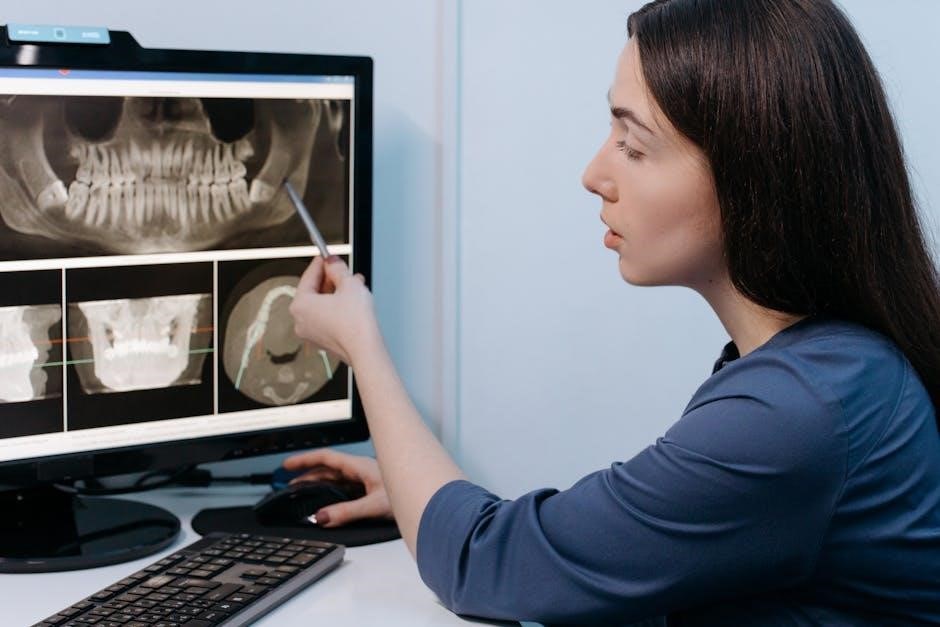
The Intraoral Examination Details section of a dental clinical notes template (PDF) provides a systematic record of findings inside the patient’s mouth. This detailed assessment begins with an evaluation of the soft tissues – noting the color, texture, and presence of any ulcers, lesions, or inflammation of the gingiva, buccal mucosa, tongue, palate, and floor of the mouth.
Hard tissue examination meticulously documents the condition of each tooth, including any caries, restorations, fractures, or wear facets. The template should facilitate charting of missing teeth, existing restorations (material and condition), and periodontal probing depths.
Occlusion is assessed and recorded, noting any malocclusion, crossbites, or open bites. Accurate documentation of intraoral findings is crucial for diagnosis, treatment planning, and monitoring patient’s oral health.
Diagnosis & Treatment Planning
The Diagnosis & Treatment Planning section within a dental clinical notes template (PDF) is pivotal for outlining the patient’s oral health status and proposed interventions. Following a thorough clinical examination, a definitive dental diagnosis, utilizing established classification systems (like ICD-10), must be clearly documented.
This section details the specific dental problems identified – caries, periodontal disease, malocclusion, etc. – and their severity. A comprehensive treatment plan is then formulated, outlining the recommended procedures to address each diagnosis, including restorative work, extractions, periodontal therapy, or orthodontic treatment.

The plan should include sequencing of treatments, estimated costs, and potential risks/benefits, ensuring informed consent and patient understanding. Proper documentation supports legal and ethical practice.
Treatment Rendered – Detailed Procedures
The Treatment Rendered section of a dental clinical notes template (PDF) meticulously records all procedures performed during each patient visit. This isn’t simply a list; it requires detailed documentation of each step taken, materials used (brand, shade, lot number), and any complications encountered.
For restorative procedures, note the cavity preparation design, impression materials, and final restoration details. Surgical procedures demand precise descriptions of the surgical technique, anesthesia administered, and post-operative instructions given.
Accurate records are vital for tracking treatment progress, ensuring continuity of care, and providing legal defense if needed. This section should also include the date, time, and provider initials for each procedure performed, maintaining a clear audit trail.
Medication Administration Records
A dedicated Medication Administration Records section within the dental clinical notes template (PDF) is paramount for patient safety and legal compliance. This section must meticulously document every medication administered, including local anesthetics, sedatives, and post-operative prescriptions.
Essential details include the drug name (generic and brand), dosage, route of administration, time administered, and the provider’s signature or initials. Any adverse reactions experienced by the patient must be immediately and thoroughly documented, along with the interventions taken.
Furthermore, record any patient allergies and contraindications considered before medication administration. Maintaining accurate medication records demonstrates responsible patient care and protects the practice from potential liability.
Legal and Ethical Considerations
Dental clinical notes (PDF) demand strict adherence to legal standards like HIPAA, ensuring patient confidentiality and data security within the practice.
HIPAA Compliance in Note-Taking
Dental clinical notes, particularly those maintained as PDF documents, fall directly under the purview of the Health Insurance Portability and Accountability Act (HIPAA). Maintaining HIPAA compliance isn’t merely a legal obligation; it’s an ethical imperative safeguarding patient privacy.
When utilizing a dental clinical notes template, ensure all protected health information (PHI) – including patient names, dates of birth, treatment details, and insurance information – is handled with utmost care. Access controls are vital; limit access to notes only to authorized personnel.
PDF templates should be stored on secure, encrypted servers, and transmission of these files must occur via secure channels. Regular staff training on HIPAA regulations and proper note-taking procedures is essential. Any breaches, even accidental disclosures, must be reported immediately, following established protocols.
Proper de-identification techniques should be employed when using data for research or quality improvement purposes, ensuring patient anonymity. A robust audit trail documenting access and modifications to PDF notes is also crucial for demonstrating compliance.
Maintaining Accurate and Objective Records
The integrity of dental clinical notes, especially those saved as PDF files, hinges on accuracy and objectivity. Avoid subjective language, personal opinions, or assumptions; focus solely on factual observations and documented findings. A well-structured dental clinical notes template aids in this process.
Record all relevant information, even if seemingly minor, as it could prove crucial later. Use standardized terminology and abbreviations consistently throughout all PDF notes to minimize ambiguity. Corrections should never involve erasing or white-out; instead, draw a single line through the error, initial and date the correction, and add the accurate information.
Ensure all entries are legible and promptly recorded, ideally during or immediately after the patient encounter. Timely documentation reduces reliance on memory and enhances reliability. Regularly review PDF notes for completeness and accuracy, and address any discrepancies promptly.
Objective documentation builds trust with patients and provides a strong defense in potential legal situations, reinforcing the value of a detailed dental clinical notes template.
Documentation for Medicolegal Protection
Comprehensive and meticulously maintained dental clinical notes, particularly in PDF format, are paramount for medicolegal protection. A detailed dental clinical notes template serves as a legal record of the care provided, protecting both the patient and the practitioner.
Accurate documentation demonstrates due diligence, proving the standard of care was met. This includes recording informed consent, treatment plans, any complications, and patient communication. PDF notes should clearly articulate the rationale behind treatment decisions and any alternatives discussed.
In the event of a dispute, these records can be invaluable evidence. Ensure all entries are factual, objective, and free from alterations. Proper documentation can mitigate liability and demonstrate responsible practice. Maintaining a secure and organized system for storing PDF notes is also crucial.
A well-documented patient history, using a standardized dental clinical notes template, strengthens your legal position and safeguards your professional reputation.

Types of Dental Clinical Notes Templates
Dental clinical notes templates, often available as PDFs, vary by specialty; general dentistry, periodontics, and orthodontics each require tailored documentation forms.
Template for General Dentistry
A general dentistry clinical notes template, frequently utilized as a PDF, must encompass a broad spectrum of patient care. It begins with essential patient demographics and a detailed chief complaint section, outlining the reason for the visit. A comprehensive medical and dental history is paramount, including allergies, medications, and past treatments.
The clinical examination section should meticulously document vital signs, extraoral and intraoral findings – noting any abnormalities or concerns. Accurate charting of existing restorations, missing teeth, and any pathological conditions is vital. Diagnosis and a proposed treatment plan, discussed with the patient, must be clearly recorded.
Furthermore, the template needs sections for documenting treatment rendered, specifying procedures performed, materials used, and any complications encountered. Medication administration records, including dosage and route, are also essential components, ensuring a complete and legally sound patient record.
Template for Periodontics
A periodontics clinical notes template, often a PDF document, requires specialized sections beyond general dentistry. It must include detailed probing depths, bleeding on probing (BOP), recession measurements, and furcation involvement assessments for each tooth. Documentation of clinical attachment loss (CAL) is crucial for tracking disease progression.
Radiographic findings, specifically noting bone loss patterns and alveolar crest morphology, are essential. The template should facilitate charting of mucogingival defects and frenum attachments. A thorough assessment of patient-specific risk factors, like smoking or diabetes, is also necessary.
Treatment plans should detail scaling and root planing (SRP) procedures, surgical interventions (e.g., flap surgery, bone grafting), and maintenance protocols. Post-operative instructions and patient education regarding oral hygiene are vital components, ensuring comprehensive periodontal care documentation.
Template for Orthodontics
An orthodontic clinical notes template, frequently a PDF, demands specific documentation beyond routine dental exams. It necessitates detailed records of cephalometric analyses, including skeletal and dental relationships, and comprehensive charting of malocclusion characteristics – crowding, spacing, overbite, and crossbite.
Photographs – extraoral and intraoral – are critical for treatment planning and progress monitoring. Records of panoramic radiographs and periapical views are essential for assessing root morphology and impacted teeth. The template should facilitate documenting appliance selection (braces, aligners) and treatment goals.
Progress notes must track bracket placement, wire changes, and patient compliance. Documentation of force levels, tooth movement, and any adverse reactions is vital. A clear outline of retention protocols post-treatment is also a necessary component of the record.
Utilizing PDF Templates Effectively
Dental clinical notes templates in PDF format benefit from dedicated software for editing and organization, ensuring efficient digital storage and secure data backup.
Software for Editing PDF Templates
Several software options facilitate efficient editing of dental clinical notes templates in PDF format. Adobe Acrobat Pro is a widely recognized industry standard, offering robust features for form creation, text editing, annotation, and digital signatures. It allows for customization of existing templates and creation of new ones tailored to specific practice needs.
Alternatives like PDFelement and Nitro PDF Pro provide similar functionalities at potentially lower price points. These programs enable users to add text boxes, checkmarks, and other form fields, streamlining data entry during patient encounters. Furthermore, many Electronic Health Record (EHR) systems integrate PDF editing capabilities directly within their platforms, offering a seamless workflow for managing clinical notes;
Cloud-based solutions such as Smallpdf and iLovePDF offer convenient online editing tools, accessible from various devices. When selecting software, consider factors like ease of use, compatibility with existing systems, security features, and cost to ensure it aligns with the practice’s requirements.
Best Practices for PDF Note Organization
Effective organization of dental clinical notes templates, stored as PDF files, is paramount for efficient retrieval and workflow. Implement a consistent naming convention incorporating patient name, date of service, and note type (e.g., “Smith_John_20260505_Exam”). Establish a clear folder structure within your digital filing system, categorized by year, month, or patient identifier.
Utilize PDF software features like bookmarks and tags to create internal navigation within lengthy notes, enabling quick access to specific sections. Regularly review and archive older notes according to legal retention requirements. Consider employing a document management system (DMS) integrated with your EHR for automated organization and indexing.
Ensure all team members adhere to the established organizational protocols to maintain consistency. Regularly back up your PDF files to a secure location, safeguarding against data loss and ensuring business continuity.
Digital Storage and Backup of PDF Notes
Secure digital storage of dental clinical notes templates, primarily in PDF format, is critical for protecting sensitive patient data and ensuring business continuity. Cloud-based storage solutions offer accessibility and automatic backups, but prioritize HIPAA-compliant providers with robust security measures.
Implement a multi-layered backup strategy, including on-site and off-site backups, to mitigate data loss from hardware failures, natural disasters, or cyberattacks. Regularly test your backup restoration process to verify its effectiveness. Encrypt PDF files both in transit and at rest to prevent unauthorized access.
Establish clear access controls, limiting access to patient records to authorized personnel only. Maintain detailed audit trails of all access and modifications to PDF notes, enhancing accountability and security. Regularly update your security protocols to address evolving threats.